


DEEP DIVE
Airless wheels: why we walked away from air
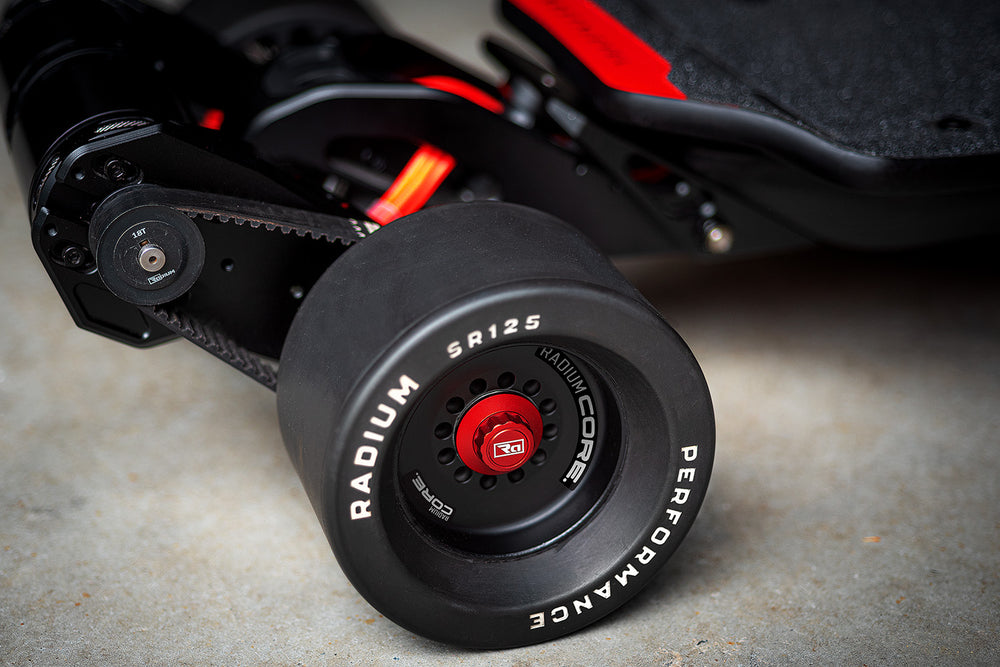
Pneumatic tyres grip well and ride soft — until they puncture 20km from home. The SR125 exists because we wanted the ride without the failure mode. This is how it works.

The urethane / pneumatic trade-off
Electric skateboards have historically offered two wheel choices. Urethane: precise, fast, maintenance-free — and harsh over broken surfaces, with grip that falls off sharply on dust or damp. Pneumatic: comfortable and grippy — and carrying a tube that punctures, loses pressure, and needs the kind of attention a bicycle owner expects but a boarder shouldn't have to give.
On an electric board a flat isn't an inconvenience, it's a ride-ender. There's no walking a 20kg board home comfortably. We wanted rubber's grip and compliance with urethane's reliability.
How the SR125 is built
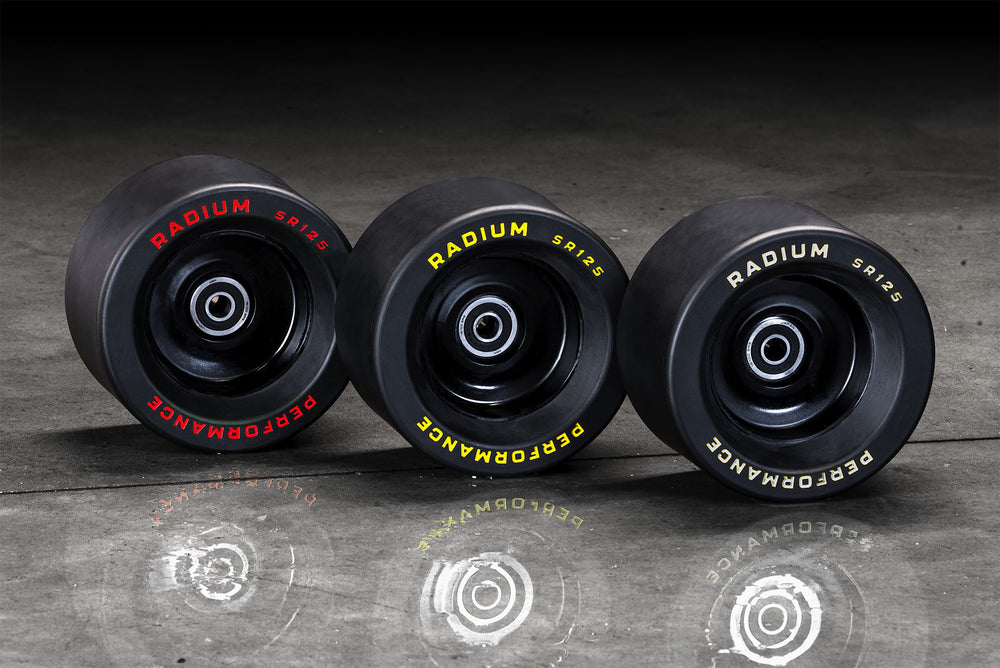
The SR125 is a 125×75mm wheel built from a natural/synthetic rubber compound over an engineered airless core. The core does the job air pressure normally does — controlled deformation under load — but it can't puncture and never needs topping up. The rubber layer supplies the grip and damping. The combination behaves like a high-quality urethane wheel in steering response, with genuine rubber traction on the surfaces that scare urethane: dust, paint lines, damp bitumen.
The V3 generation is Kegel-compatible straight off the hub and 50 grams lighter per wheel than V2 — a full 200g cut in unsprung, rotating mass, which is the most valuable place on the whole board to save weight.
One board, any wheel
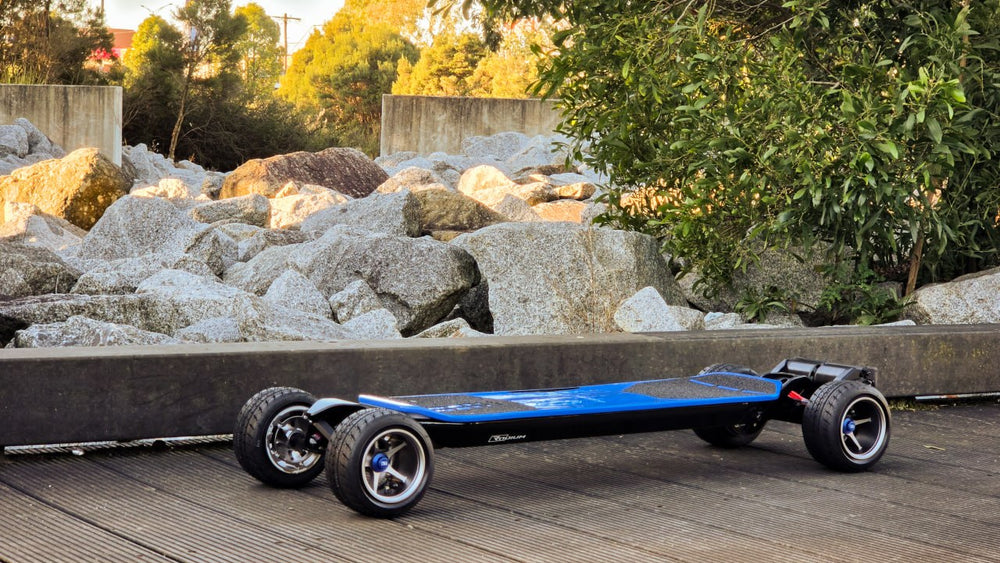
Airless is the default, not a lock-in. The Mach One platform takes everything from 80mm street thane to 165mm all-terrain setups, including Kegel-core wheels like the Mad 105. Swapping wheels genuinely changes the board's character — commute on SR125s, run thane for a smooth-carpark session, go big for gravel. The belt drivetrain and mounting hardware are designed around that flexibility.