


Tech · Deep Dive
How the Mach One Works
The original Mach One was engineered from scratch, not assembled from a parts catalogue. This is a look under the deck of the carbon-fibre flagship — the systems that make it drive the way it does, in plain terms.
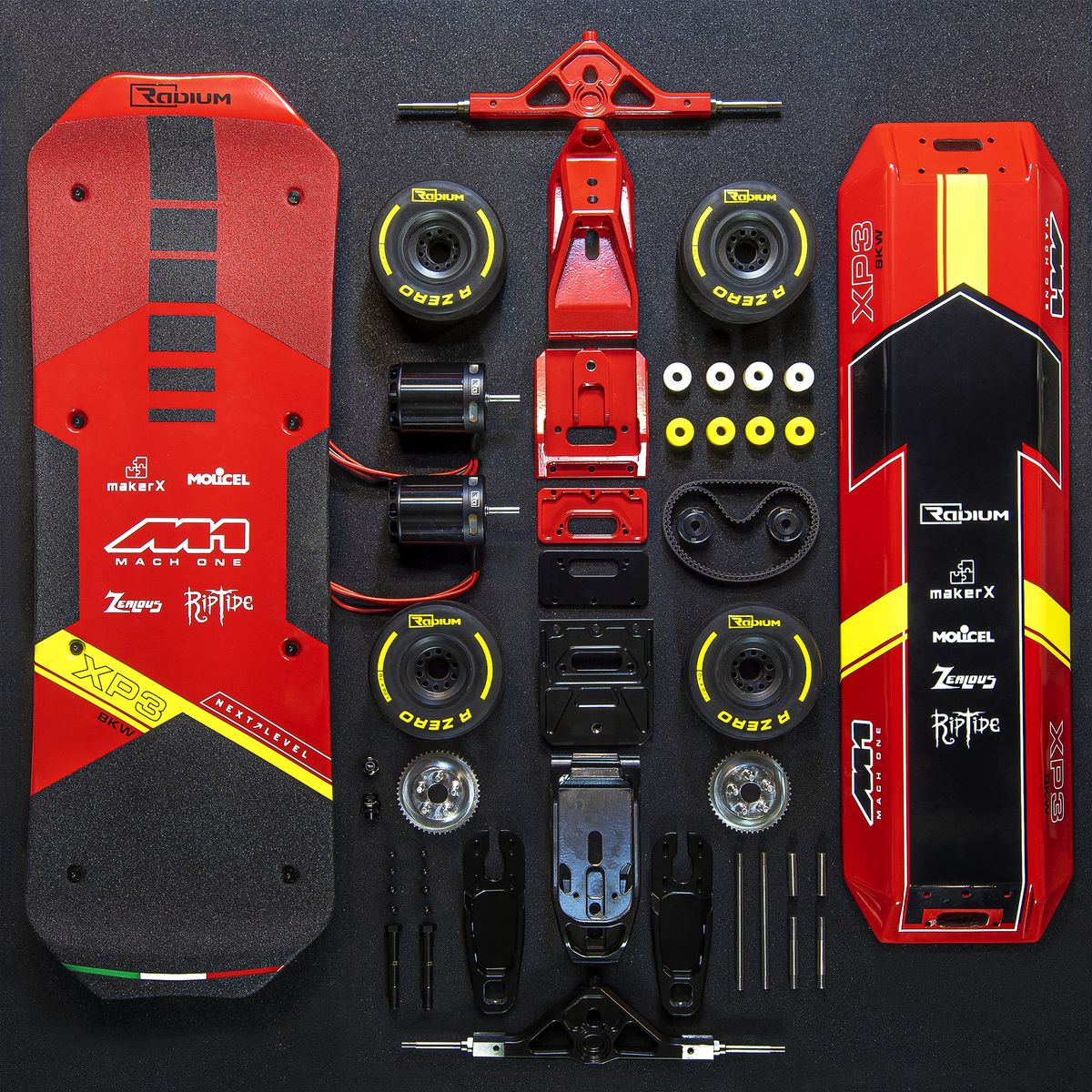
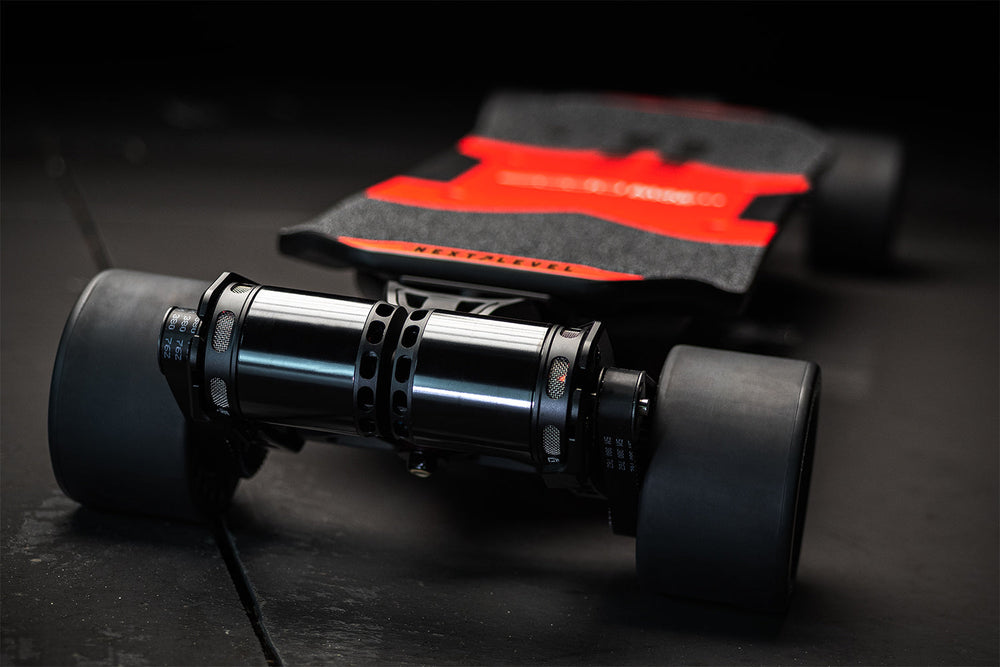
Twin-motor belt drive
The Mach One runs two Radium 6485 brushless motors (205Kv) through a HTD5M belt system. Belts deliver strong, immediate torque and stay serviceable — and the gearing is yours to change. A Radium Core 45T pulley pairs with a 16T or 18T motor pulley to trade outright torque for more top end.
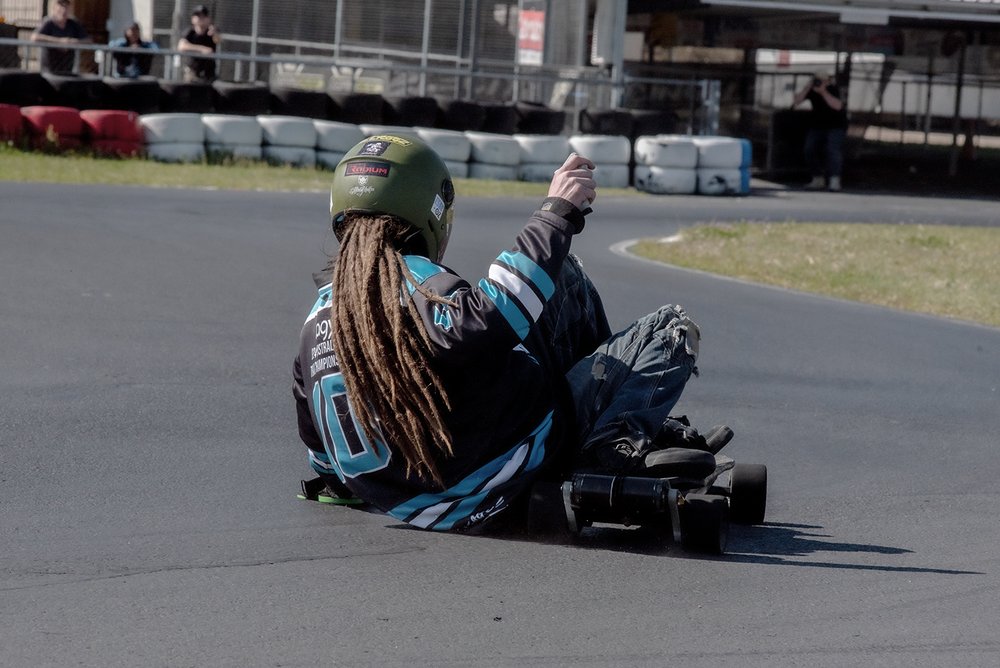
RTS — Radium Torque Steering
Independent wheel control. Infinite ride tuning. That's what Radium Torque Steering gives you. The RTS system drives torque independently at each wheel — torque vectoring — so the Mach One's trucks react at the speed of thought, and it's yours to tune for how and where you like to ride.
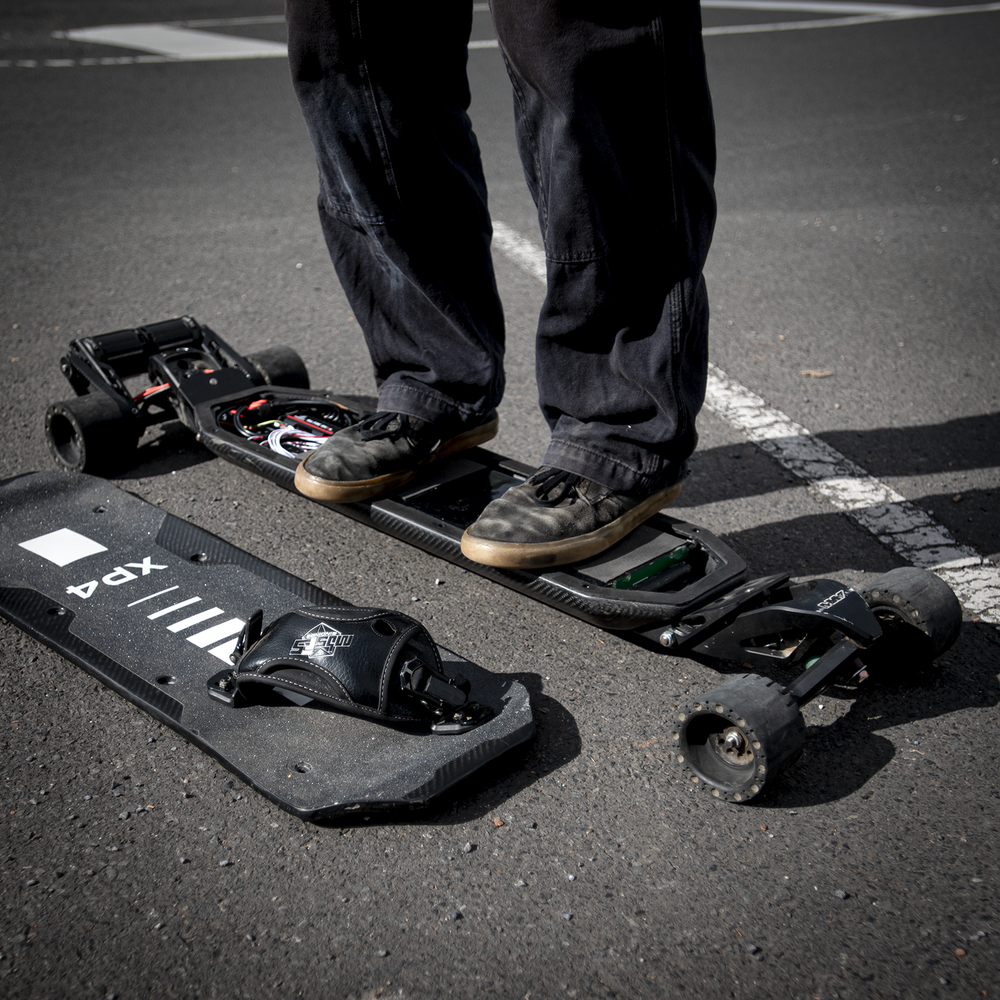
Carbon-fibre monocoque
The Mach One is built on a carbon-fibre monocoque, flipping the script with trucks mounted directly to the enclosure instead of the deck. Compact motorcycle style swing arm suspension reintroduced flex in the up and down plane, while the overall design virtually eliminates torsional flex which is central to how the board feels: planted and precise rather than flexy and vague.
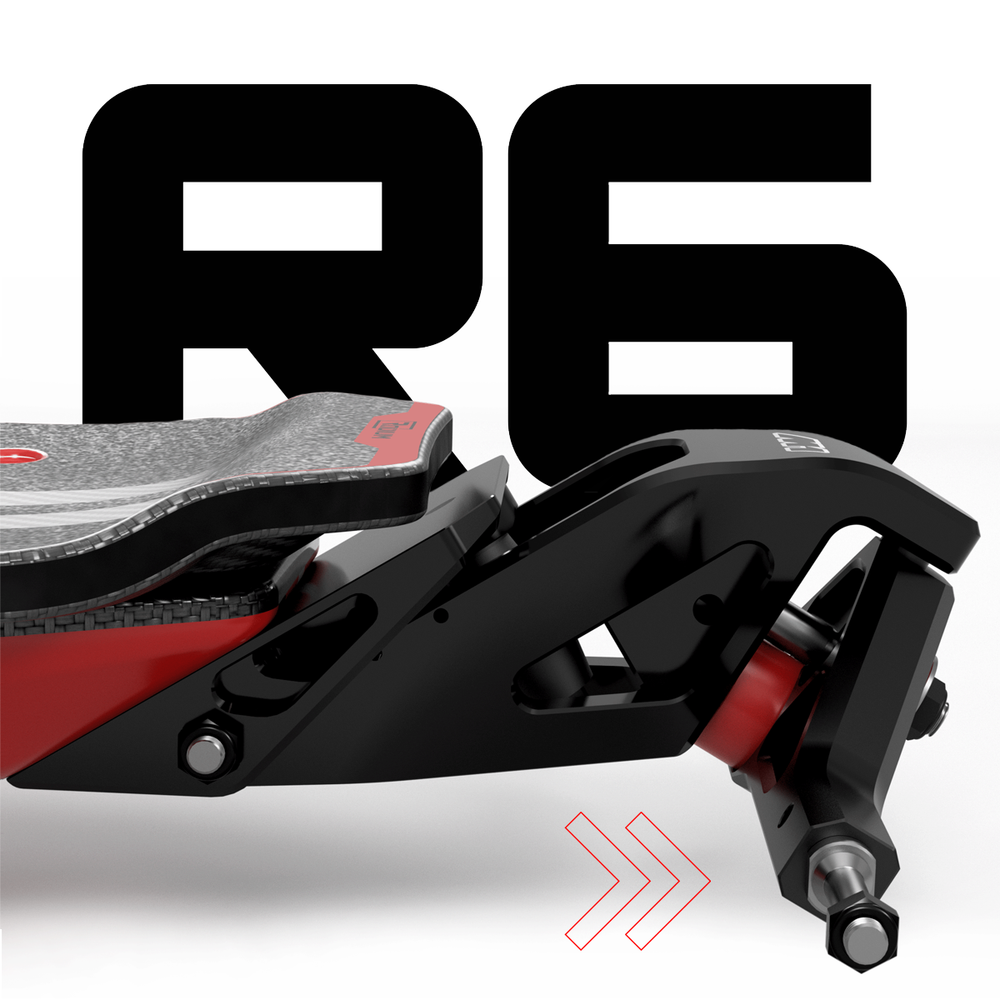
R6 trucks and swing-arm suspension
The R6 trucks are built on modern downhill skate technology, refined across six designs. Split-angle geometry — a 30° rear for stability, a 60° front doing twice the steering — rides on narrow 237mm hangars for direct, agile handling. An offset twin-kingpin bushing system with Riptide bushings and hardened 11mm kingpins keeps the board rock-solid at speed. Paired with the adjustable swing-arm suspension, the chassis isolates road vibration while keeping every steering input immediate.
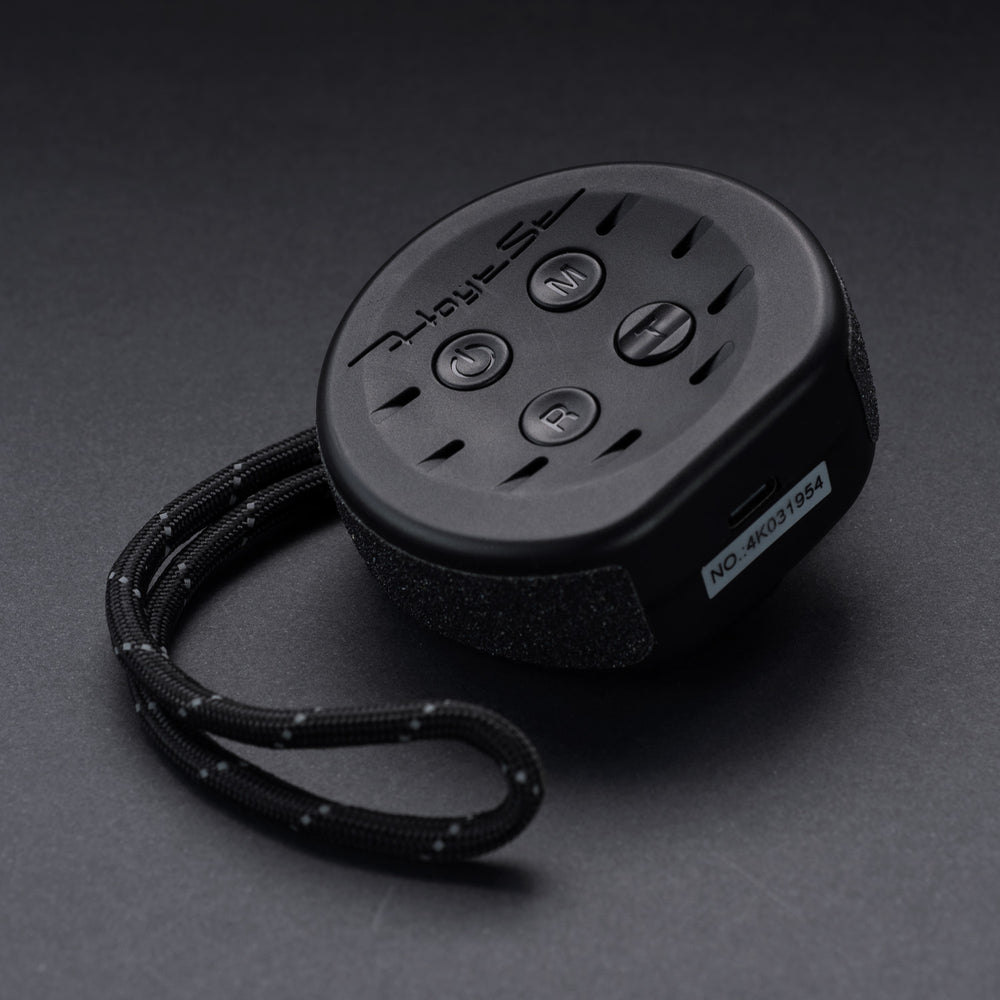
The Hoyt Puck remote
Control runs through a Hoyt Puck remote with three ride modes — 30%, 60% and 100% — that dial acceleration and throttle sensitivity to your experience without capping top speed. It adds Smart Reverse for tight spots, a lock mode for carrying, and switches between right- and left-handed use.
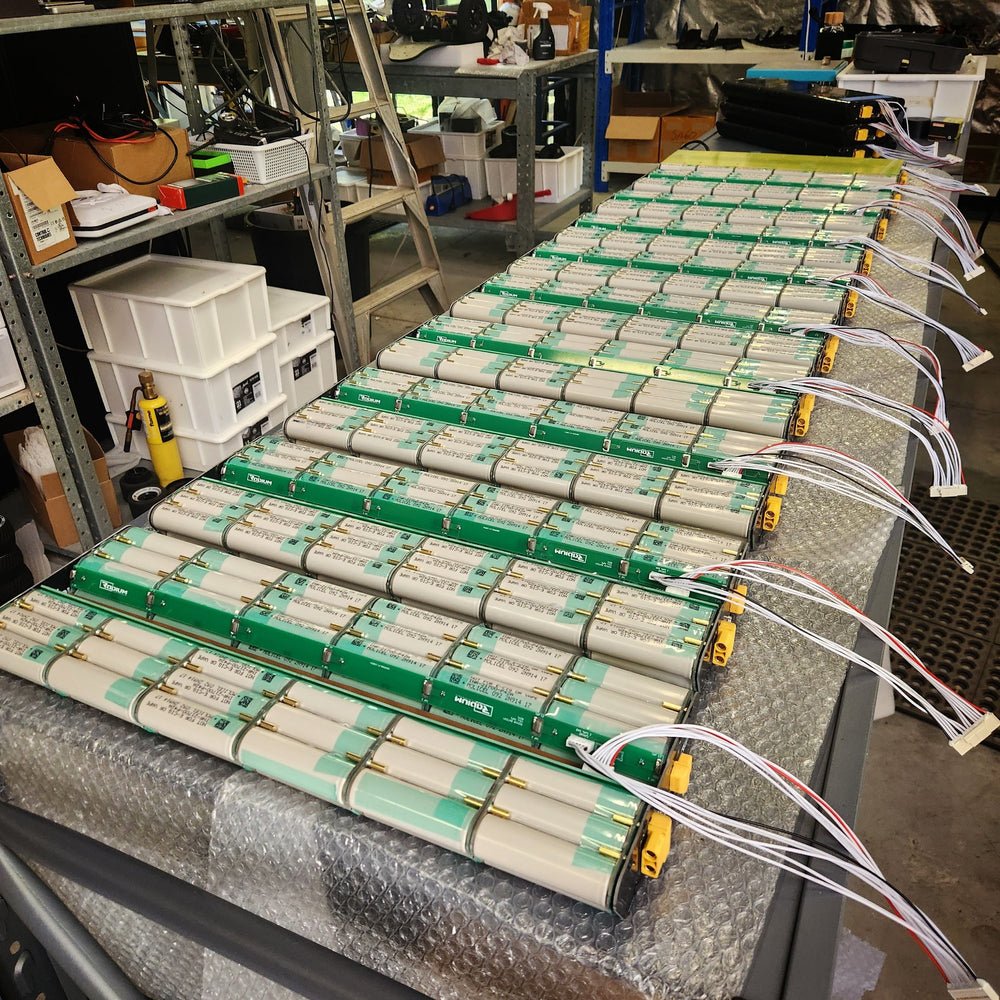
Smart battery, watched in real time
A 48V 1089Wh pack built on Molicel P42A cells (12S6P), managed by a BMS you can actually see into. The Radium App connects over Bluetooth to show live cell voltages, temperature, balance and battery health — and it recharges in just two hours from a compact 1kg fast charger.
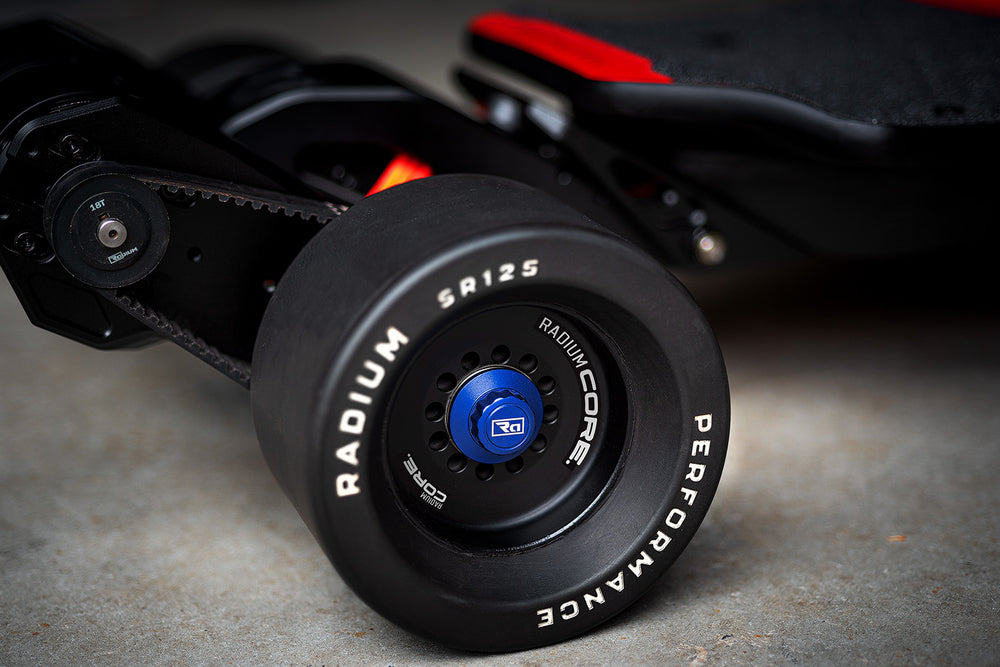
SR125 airless wheels
The SR125 is Radium's own 125×75mm wheel: an NR/SBR rubber compound over an airless core, tuned to pair urethane-like response with genuine rubber grip. No pinch-flats or punctures — the ride quality of a pneumatic without its single biggest failure point. The V3 wheels are Kegel-compatible and 50g lighter per wheel than the previous generation, cutting unsprung mass where it matters most for handling.
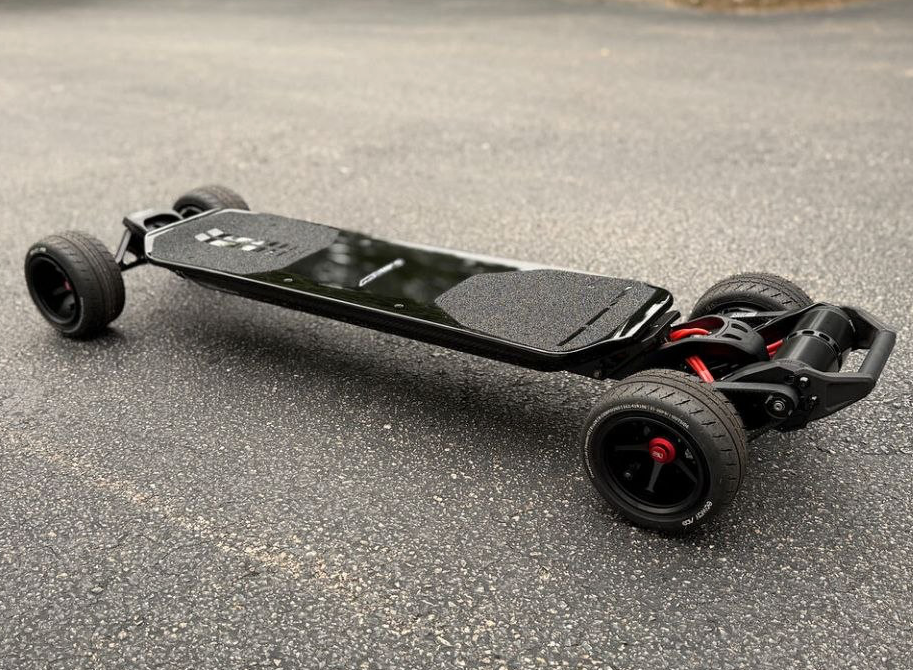
Built to ride different wheels
One platform, many setups. The Mach One ships on Radium 125mm airless rubber wheels but takes anything from 80mm street thane up to 165mm, including Kegel-core wheels like the Mad 105 — and the hardware is there for all-terrain. Change the wheels and you change the board.
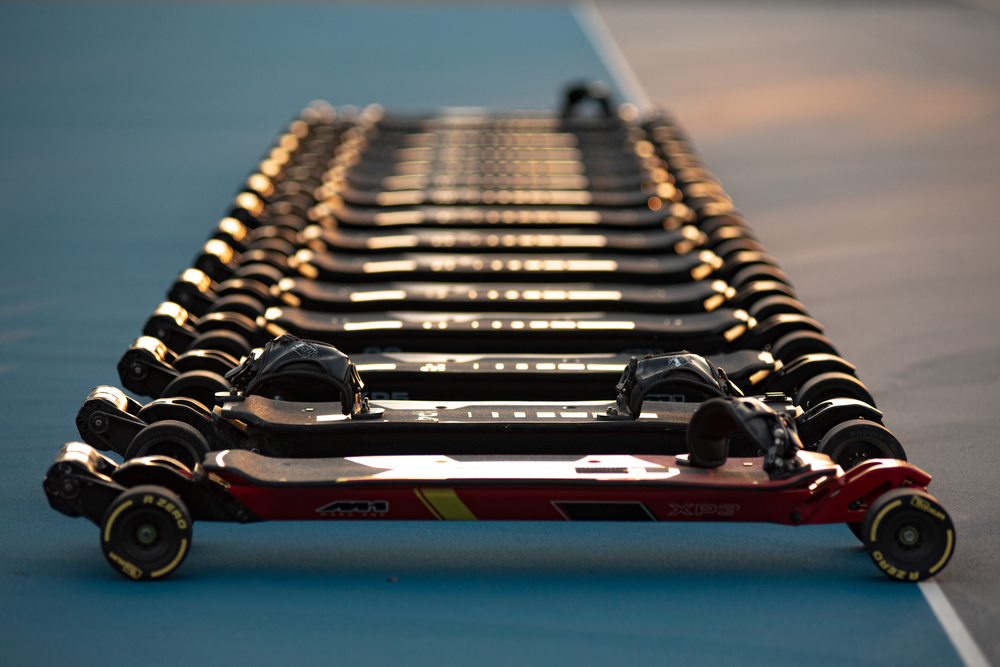
The numbers
- Power: 8000W
- Top speed: 64 km/h (40 mph) / 72 km/h (45 mph)
- Range: 30–50 km (20–30 miles)
- Battery: 48V 1089Wh Molicel P42A (12S6P)
- Motors: 2 × Radium 6485 brushless, 205Kv
- Wheels: Radium 125mm airless rubber
- Charge time: under 2 hours (12A charger)
- Weight: 17 kg
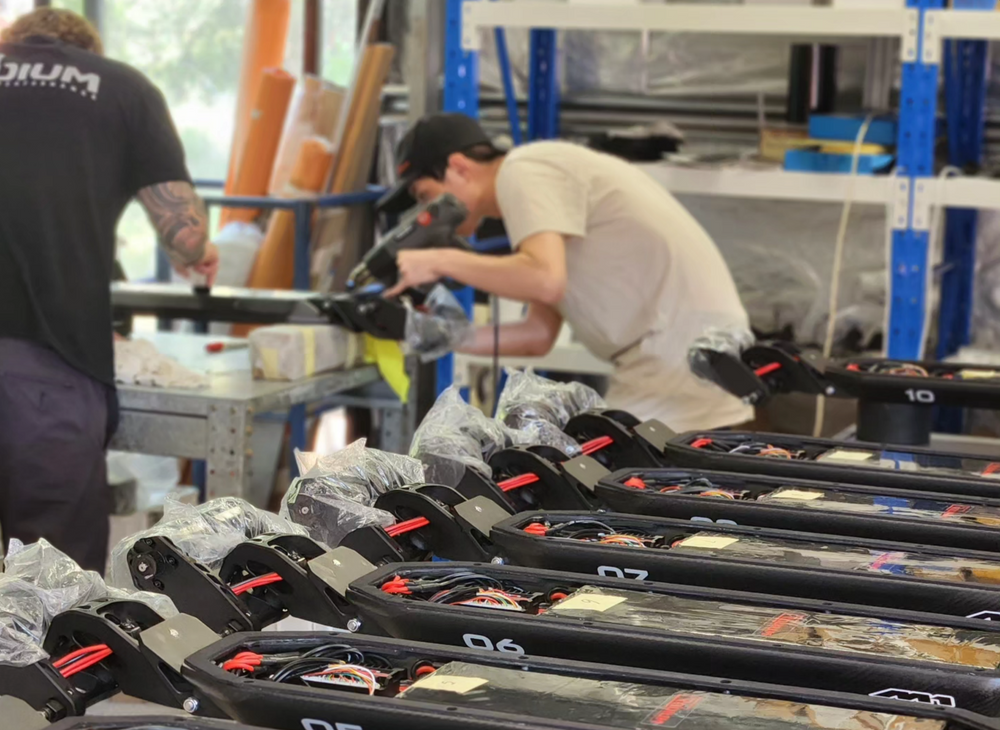
Tunable and built to be serviced
Trucks and suspension are tunable through bushing durometer and pre-load. Belts, pulleys, bearings and bushings are all user-replaceable wear parts, backed by genuine Radium spares, published service guides and a 12-month warranty. The engineering doesn't stop at the sale.
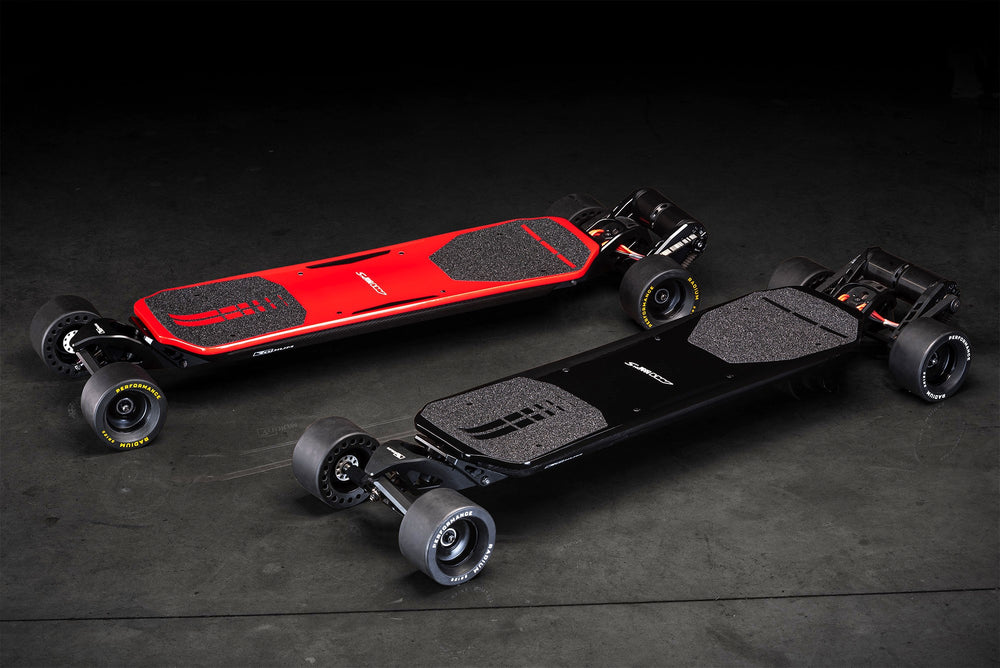
A note on the Mach One S
The Mach One S is a different board, not a trim level. It's built to its own design — a wooden deck rather than carbon-fibre, without RTS torque vectoring, and with its own battery, BMS, motor system and remote. This page is about the original Mach One; the Mach One S has its own story.