


DEEP DIVE
The carbon fibre monocoque
The Mach One's chassis borrows its core idea from Formula 1: a hollow carbon tub that IS the structure, not a box bolted to one. Here's why that matters on a skateboard.
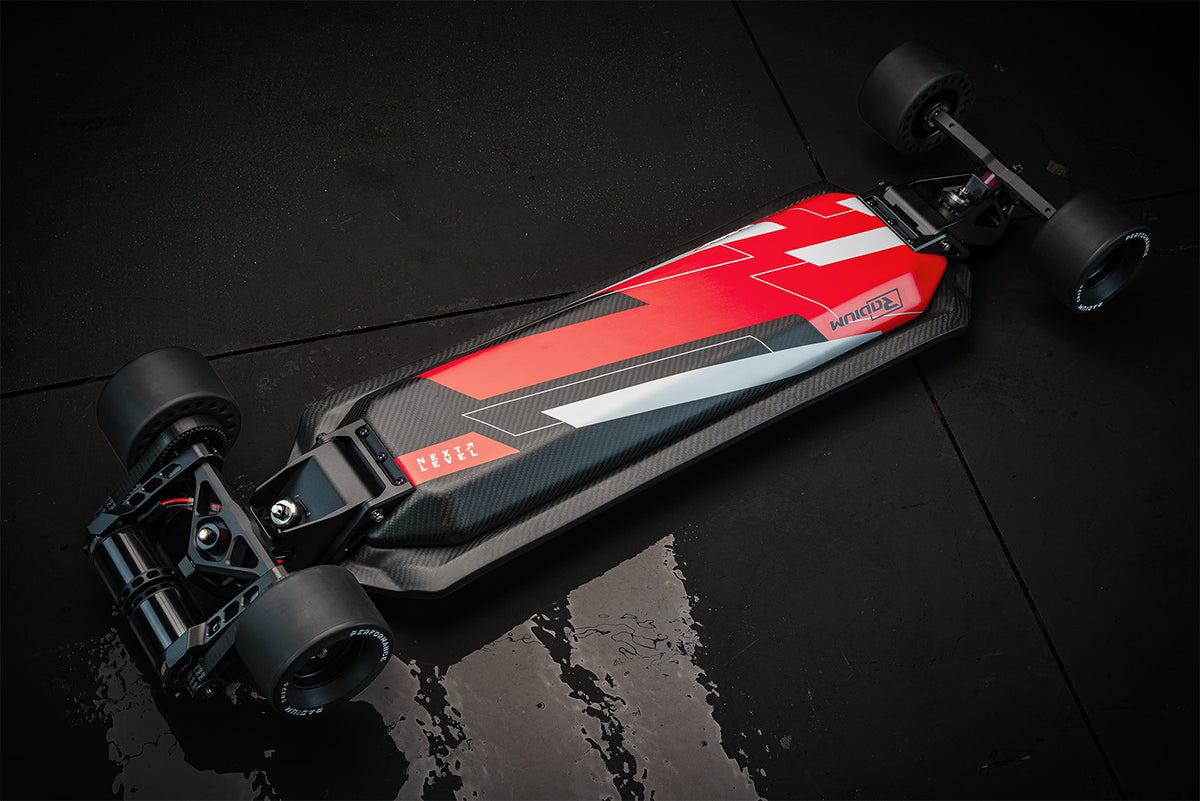
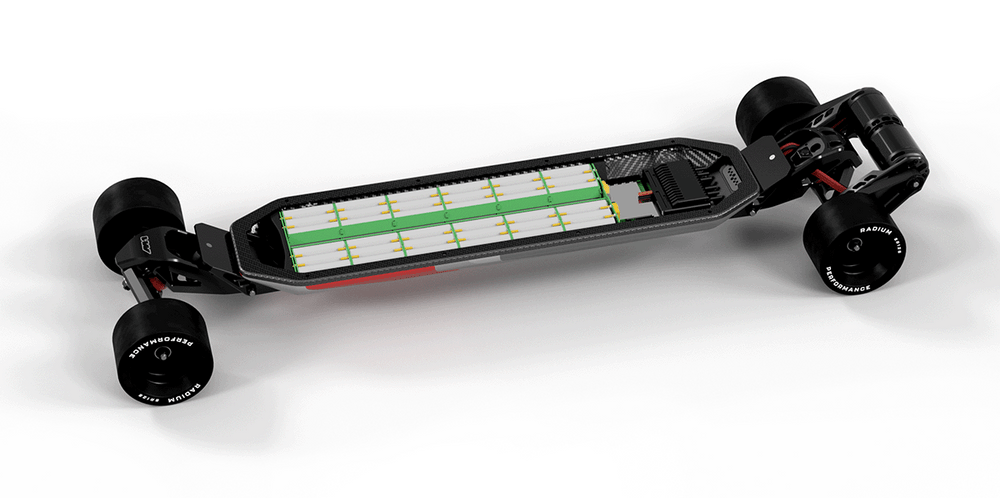
Why a monocoque
Almost every electric skateboard is a wooden deck with an enclosure screwed to it. The deck flexes, the enclosure doesn't, and the screws negotiate the difference — which is why cracked enclosures and stripped inserts are endemic across the industry. The battery, the most valuable and most safety-critical component, lives in the weakest part of the build.
A monocoque inverts that. The Mach One's chassis is a hollow, load-bearing carbon fibre tub — the deck, the enclosure and the structure are one part. Loads flow through the whole shell instead of concentrating at screw points. The battery sits inside the strongest component on the board.

Why carbon fibre
Carbon's stiffness-to-weight ratio is the point. A skateboard chassis needs to be stiff where the drivetrain and suspension mount — flex there is slop in the handling — while keeping total weight rideable. Doing that in aluminium means weight; doing it in wood means bulk and flex. The carbon layup gives us a chassis that's stiff at the mounting points, light overall, and shaped precisely around the battery and electronics inside it.
Press coverage of the Mach One kept returning to the same phrase — that it felt 'planted and precise rather than flexy and vague'. That's the monocoque talking.

The swappable deck
A rigid carbon tub could easily have made the board un-personal. The easy-swap deck system fixes that: the top surface is a separate, replaceable component, so grip, colour and standing feel are changeable without touching the structure. On the Mach One S the decks are deliberately priced so owners can keep spares — gloss automotive paint over the composite, with the enclosure clear-coated to show the carbon twill underneath.